Cheap Seats, Costly Diaries: An Operator's View on Empty Legs in 2026
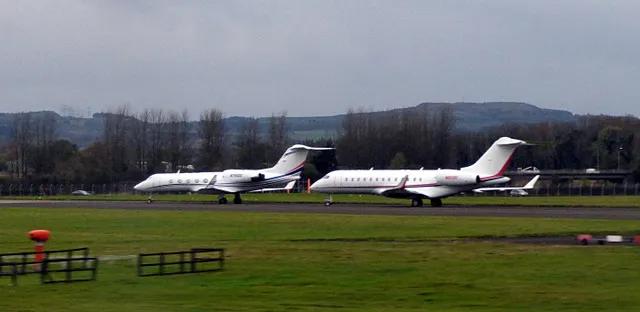
Photo: Thomas Nugent , CC BY-SA 2.0, via Wikimedia Commons
There is a particular kind of optimism that seizes a buyer when a Nice–London leg appears at a fifth of the normal price. It is understandable. It is also, more often than the industry cares to admit, misplaced. Positioning flights are not a discount on private aviation; they are a different product entirely, sold with the vocabulary of a bargain and the contractual certainty of a rumour.
We say this as people who sell them. Empty legs are a legitimate, useful and occasionally excellent instrument. But the pitch has drifted some distance from the reality, and buyers deserve the unvarnished version.
What an empty leg actually is
An aircraft has to be somewhere. When a client flies one-way from London to Olbia and the aircraft is needed back in the UK, the operator has a choice: fly it home empty, or sell the repositioning sector at whatever the market will bear. Anything above the marginal cost of the fuel and crew is found money.
That is the economics. It explains the pricing. It also explains why the offer is inherently fragile: the empty leg exists solely because someone else's itinerary created it, and it evaporates the moment that itinerary changes.
The four failure modes
Schedule drift. The parent booking moves by forty minutes; your departure moves by three hours. Unlike a scheduled airline, there is no compensation regime and no alternative service. You are a passenger on someone else's plan.
Fee stacking. The headline figure frequently excludes handling, landing and parking fees, crew overnight costs, de-icing, catering and passenger taxes. A quote that looks like £6,000 can settle nearer £9,000 once the operator's cost base is fully loaded. Always ask for the all-in figure in writing.
Aircraft substitution. The empty leg is tied to a specific tail. If that aircraft goes technical, the operator's obligation may be limited to a refund rather than a replacement. A light jet can become a turboprop, or nothing at all.
Weak consumer protection. This is the one buyers underestimate. Where a package holiday or a scheduled ticket brings statutory rights, an ad hoc charter contract is largely a matter of what the parties signed. Deposit forfeiture, cancellation and liability terms vary wildly between operators and brokers. In many empty-leg arrangements the buyer carries nearly all the schedule risk.
Where empty legs genuinely work
The product is at its best when the buyer's flexibility exceeds the seller's. Retired clients repositioning to a second home. A team that genuinely can travel on Tuesday or Wednesday. A one-way positioning need where the destination matters more than the hour of arrival.
It works less well when the leg is carrying a meeting, a board, a wedding party or a connection. If the appointment cannot move, the discount is not a discount — it is an unhedged bet on another client's diary.
The vetting questions that separate the good from the careless
- Who is the operator, and who holds the AOC? A broker's name on the quote tells you nothing about who flies the aircraft. Ask for the operator's name and check the permit and insurance position.
- Is the price all-inclusive, in writing? Handling, landing, parking, crew, catering, taxes and any repositioning surcharge. Get the total, not the components.
- What happens if the parent booking changes? Ask for the specific cancellation and rebooking terms, and read the refund clause rather than the marketing copy.
- Is the aircraft type guaranteed? If not, what is the substitution policy and does the price change?
- What is the deposit, and when does it become non-refundable? The tighter the terms, the more the operator is passing schedule risk to you.
- Is there a contract in writing? Verbal confirmations and WhatsApp exchanges are not a charter agreement.
The consumer protection gap
UK buyers of ad hoc charter are not without recourse — misrepresentation and breach of contract remain actionable, and reputable operators are typically members of trade bodies with codes of practice. But the practical reality is that the cost of pursuing a disputed £7,000 positioning flight usually exceeds the loss. That asymmetry favours the seller, and buyers should price it into their thinking.
The sensible posture is not suspicion but verification. A legitimate operator will answer every question above without hesitation. Reluctance to put terms in writing is itself information.
When the empty leg is the wrong answer
If the trip is commercially material, book a charter you control. The premium buys departure time certainty, aircraft guarantee and a contract that reflects your interests. That premium is often smaller than buyers assume once the true cost of a broken empty leg — a missed meeting, a rebooked commercial flight, a night in a hotel — is properly counted.
Private aviation's central promise is control over your own schedule. An empty leg trades exactly that away in exchange for price. Sometimes the trade is excellent. Frequently it is not, and the industry's marketing has been slow to say so.
The operator's conclusion
Buy empty legs the way you would buy a used car: with an inspection, a written contract and a clear-eyed view of what you are not getting. Used well, they are one of the few genuine value plays left in charter. Used carelessly, they are a discount on a diary you no longer control — and that is the most expensive kind of saving there is.