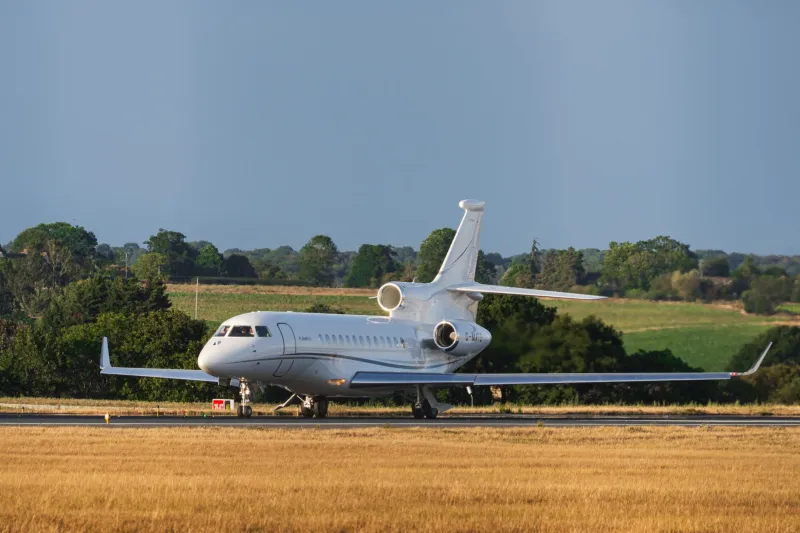
The Balance Sheet Behind the Tail Number: Deposit Risk on a 2026 UK Charter

The payment precedes the proof
A private charter is unusual among high-value services in how much of the buyer's money moves before the service is delivered. The aircraft may be inspected, the operator's Air Operator Certificate checked and the crew complement discussed at length, yet the deposit is frequently transferred on the strength of a quote and a signed charter agreement. For a UK buyer, that transfer is not merely an administrative step. It is a credit decision.
The AOC confirms that an operator is permitted to fly. It does not confirm that the company can absorb a weak quarter, meet its payroll or honour a refund if a aircraft goes technical. In 2026, with charter demand uneven across London and the regional FBOs, the distinction matters. A capable operator and a solvent operator are usually the same business, but the buyer should not assume it without evidence.
A deposit is an unsecured loan in all but name
When a buyer pays a booking deposit, it is effectively extending unsecured credit to the contracting party. If the charter is cancelled because the operator fails, the buyer may become an unsecured creditor alongside fuel suppliers, handlers and lessors. Recovery is rarely quick and often uncertain. The practical question is not whether the operator looks reputable, but where the buyer ranks if the worst happens.
The first step is to identify who receives the money. A broker may present the quote, but the contracting party may be the operator, a management company or a special-purpose entity. The bank account name should match the contracting entity. Any request to pay a different company, or a personal account, should be treated as a red flag until explained in writing. Invoice fraud is not confined to other sectors; private aviation's large transfers make it a target.
Mapping the payment path
Deposit structures vary, but most charters follow a familiar pattern: a booking deposit, an interim payment and a balance before departure. Each tranche should have a defined purpose and a defined consequence if the charter does not proceed. A deposit that is simply non-refundable from the outset gives the buyer little protection and gives the operator little incentive to document progress.
Escrow is the cleanest solution where the sums justify it. True escrow places funds with an independent provider and releases them only when specified conditions are met. A client account held by the operator or broker is not the same thing, although it may still offer useful segregation if the terms are clear. Buyers should ask who controls the account, what triggers release, what happens on cancellation and whether the arrangement survives the operator's insolvency. The answers should be in the charter agreement, not only in an email.
Reading the public file
Before transferring a significant deposit, a UK buyer can assemble a proportionate financial picture from public sources. Companies House should show the contracting entity's filing history, accounts, confirmation statement and charges. Overdue filings, a recent name change, negative net assets or a going-concern emphasis in the accounts are not conclusive, but they are questions worth asking. Charges over aircraft or receivables may indicate how the operator is financed and where a buyer's claim would sit.
The Civil Aviation Authority's register confirms the AOC holder, but it should be read alongside the corporate structure. A trading company may sit beneath a parent, or a fleet may be owned by lessors and managed by another entity. For larger commitments, a parent company guarantee or a bank reference may be appropriate. Credit insurance is another option, though it is rarely cheap and should be arranged before the deposit is due, not after.
Contract terms that change the ranking
The charter agreement is where deposit risk is either mitigated or accepted. A well-drafted agreement will define what happens if the operator cancels, if the aircraft is unavailable, if the operator becomes insolvent or if regulatory action grounds the fleet. The buyer should look for a clear refund obligation, a reasonable timetable for repayment and a right to terminate without penalty on defined insolvency events.
Where escrow is not used, the buyer can still negotiate. Payments can be tied to milestones such as signed acceptance, aircraft allocation and crew confirmation. The final balance can be released against a condition precedent rather than simply before departure. Set-off rights, step-in rights and assignment provisions are worth discussing with a solicitor, particularly for multi-sector programmes or repeat charter arrangements. The objective is not to over-lawyer a straightforward flight, but to ensure that a failed charter does not become an unsecured creditor claim by default.
Proportionate checks, not paralysis
Deposit risk should be managed in proportion to exposure. A single-day London to Paris charter does not justify the same inquiry as a multi-week European programme or a series of ski-season rotations. For smaller bookings, a card payment may offer some recovery route, though it should not be treated as a substitute for due diligence. For larger sums, escrow, staged payments and a parent guarantee are reasonable requests.
Eastern Air Executive's view is that the UK charter market remains capable of delivering excellent service, but buyers should treat the financial side with the same discipline they apply to aircraft selection. The tail number tells you what will fly. The balance sheet tells you who stands behind it. Before the funds leave the account, it is worth knowing which one you have actually verified.