The Standing Charge: Auditing a Night Stop on a 2026 UK Charter

There is a particular kind of charter quote that looks, at first glance, like the economical choice: out in the morning, back the same evening, no hotel, no per diem, no parking. It is only when the schedule is examined against duty-hour limits that the arithmetic begins to shift. A night stop is not a discretionary luxury bolted onto a trip; it is frequently the consequence of a legal rest requirement, a curfew, or a destination where the aircraft has nowhere sensible to go in between. Understanding what it costs — and what the alternative genuinely costs — is the difference between choosing the cheaper quote and choosing the cheaper decision.
What the Night Stop Line Conceals
Operators present overnight expenses in broadly three ways. Some quote a fixed allowance per night, some pass through costs at the end of the trip, and some bury the figure inside a block-hour rate that appears competitive until the invoice arrives. None of these is inherently improper, but each transfers a different amount of risk to the buyer. A fixed allowance is predictable and easy to budget; a pass-through arrangement is only as disciplined as the operator's procurement. The prudent buyer asks which model applies before comparing two quotes side by side, because an all-in rate and a rate-plus-expenses figure are not the same instrument.
Crew Rest Is a Costed Commodity
Crew accommodation sits at the centre of the overnight bill, and it is more structured than a hotel booking. Flight time limitations require a defined rest period — typically a minimum of ten hours, with reduced-rest provisions attracting compensating rest later — and that rest must be taken in suitable accommodation, not in an airport lounge. In practice this means a room per crew member, single occupancy, at a hotel within a reasonable transfer of the airfield. Operators with established relationships at Luton, Farnborough or Biggin Hill will have preferred crew hotels; those without will book at rack rate and pass the difference on.
Alongside the room sits the per diem. Many UK operators apply a fixed daily allowance, sometimes benchmarked against HMRC subsistence scale rates and sometimes set by company policy, and it is usually charged per crew member rather than per aircraft. For a two-pilot, one-cabin-crew aircraft on a single night, the combined accommodation and allowance figure is rarely trivial; for a long-range crew of four, it becomes a line item worth negotiating.
The Aircraft's Own Overnight Bill
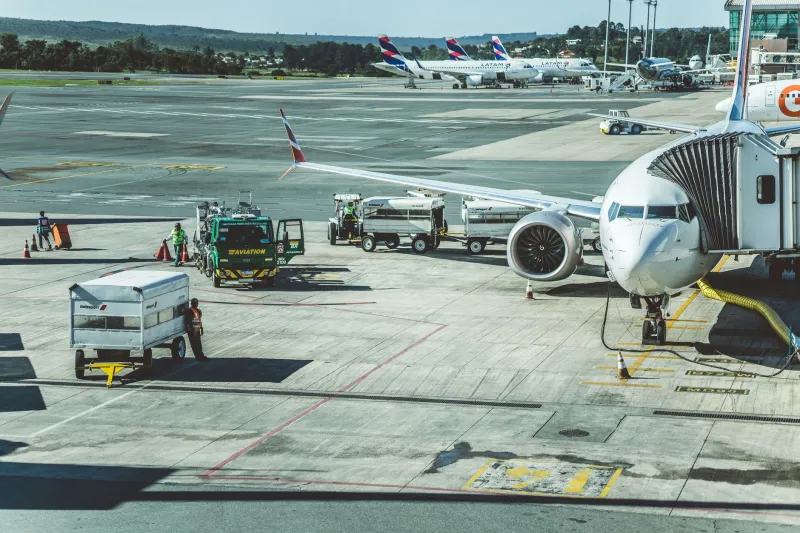
An aircraft on the ground still consumes money. Parking charges accrue per twenty-four-hour period or part thereof, and at the busier London airports those charges are not modest. Handling agents frequently levy a night-stop or out-of-hours supervision fee on top of the standard turnaround charge, and some require the aircraft to be moved to a remote stand or hangar overnight. Where the destination airfield is small and unlit, the cost may instead be a repositioning leg to a staffed airport — an expense that appears in the flight time rather than in the expenses column.
Winter adds a further variable. An aircraft parked overnight in freezing conditions will require de-icing before the morning departure, and the fluid is charged by volume. Buyers who compare an October and a January quote for the same routing are often surprised by the gap; the overnight component is where much of it lies.
Repositioning Versus Remaining: A False Economy Test
Flying the aircraft home empty and returning the following morning is sometimes cheaper than a night stop and sometimes considerably more expensive. The ferry legs consume fuel, crew duty time and slots, and they are rarely available at a discount. The calculation only becomes clear when the operator prices both options on the same basis: total flight time, total crew duty, total expenses. A useful discipline is to request exactly that comparison, in writing, for any trip where the overnight is not obviously mandated by the schedule.
There is a commercial dimension here that buyers should recognise. If the aircraft returns to base, it may be available for another customer, which the operator values. Some operators will therefore price a ferry home attractively; others will price it to discourage the loss of a day's availability. Neither behaviour is improper, but the buyer should know which dynamic is at work.
The Duty-Hour Arithmetic Behind the Schedule
A schedule that appears to avoid an overnight may simply relocate the cost. A 05:30 departure from a regional airfield followed by an evening return can push close to the maximum duty period, and once a technical delay is added the crew may time out entirely. The consequence is a reduced-rest dispensation, a standby crew, or a cancelled return — all of which are more expensive than the hotel the buyer declined to fund. For trips where the return leg falls after 21:00, the overnight should be treated as a risk-management instrument rather than a comfort.
A Negotiation Checklist for UK Buyers
Before accepting a night-stop figure, ask the operator to confirm the following in writing:
- The hotel standard, location and transfer time, and whether single occupancy is guaranteed for all crew.
- The per diem basis, and whether it is charged per crew member per night.
- Which party bears parking, handling and out-of-hours fees at the destination.
- The agreed position on de-icing in the event of an overnight freeze.
- Who absorbs the cost of an unscheduled second night caused by technical delay or weather.
- Whether the aircraft remains on station or repositions, and the flight-time implication of either.
- The cancellation terms if the trip is brought forward to a same-day return after the contract is signed.
When the Overnight Earns Its Keep
An overnight stop is the right purchase when the alternative is worse: an unreasonably early departure, a late return that risks timing out, a destination with a curfew that forecloses a night departure, or a multi-day itinerary in which the aircraft is genuinely needed on station. It is usually the wrong purchase when the aircraft can return to base cheaply and the buyer's schedule does not require it there. The test is not whether the hotel line looks high, but whether the schedule without it survives contact with duty limits, weather and the ordinary unpredictability of a European autumn. Buyers who ask that question before signing tend to find that the overnight, priced honestly, is neither a luxury nor a bargain — it is simply the correct cost of a schedule that works.