The Fourth Seat: Planning a Dog Into a 2026 UK Private Charter
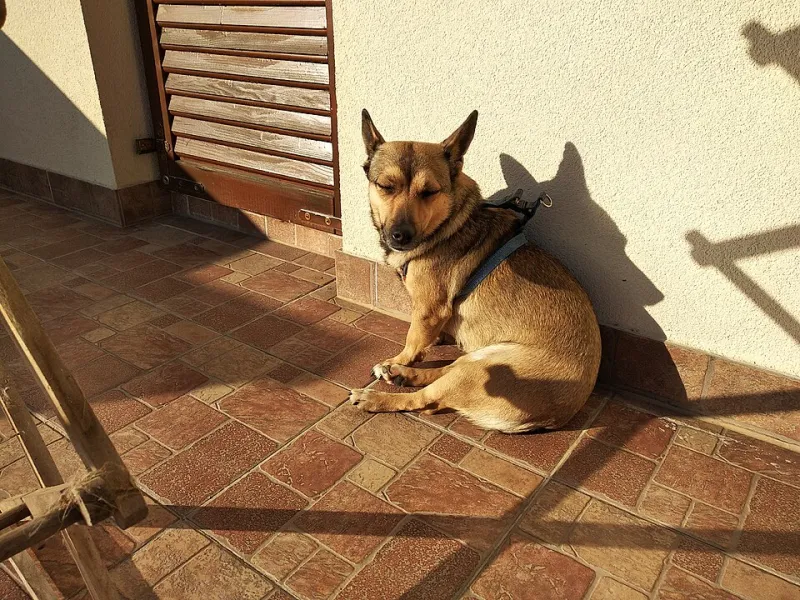
Photo: MarkoK1984, CC BY 4.0, via Wikimedia Commons
Most charter bookings begin with a route and an aircraft. Those that involve a dog are better begun with the animal itself, because a Labrador and a dachshund do not merely occupy different amounts of space — they can lead to different operators, a different cabin configuration and, on some routes, a different destination airport entirely. Treating the dog as a passenger with its own operational profile is the difference between a straightforward Tuesday and a morning spent on a apron explaining why the paperwork does not match the microchip.
Begin with the operator, not the aircraft
The phrase pet-friendly is not a category in the way that super-midsize or single-pilot is. It is a matter of each AOC holder's own policy, and those policies vary widely. Some operators carry dogs as routine, in the cabin, with no more than a note on the booking. Others decline on grounds of cabin cleanliness, crew allergy or insurance. A third group will accept an animal only under conditions — a specified carrier, a weight ceiling, an agreement that the dog remains restrained for the entire flight.
The practical consequence is that the pet question belongs in the first conversation with a broker, not the last. Circulating a quote before the operator has confirmed in writing that the animal is acceptable, and on what terms, invites the expensive discovery that the preferred aircraft is the one tail number on the list that will not take it. Ask also whether acceptance is conditional on the type of trip: a short positioning leg is judged differently from a four-hour sector.
The cabin question has a size threshold
Cabin carriage is, for most owners, the whole point of flying privately. It is also where the limits bite hardest. Cabin allowances are usually expressed as a combined weight of animal and carrier, commonly in the region of eight to ten kilograms, with the carrier required to fit within the floor space allocated to a seat. Above that, the choice is between buying an additional seat for the animal — subject to the operator's approval and the aircraft's exit-clearance rules — and consigning it to the hold.
Restraint matters more than most owners expect. A harness tethered to a seat frame, or a secured carrier, is a normal condition. Loose animals in the cabin are a safety question as much as a comfort one, and crew are entitled to insist on restraint for taxi, take-off and landing regardless of how settled the dog is at altitude.
Brachycephalic breeds — bulldogs, pugs, and the flatter-faced crosses — deserve a separate conversation. Many operators will not carry them in the hold at all, on respiratory grounds, and some apply the same caution to cabin carriage on longer sectors. It is worth rehearsing that question explicitly rather than assuming a general pet policy covers every breed.
Hold carriage, where it is offered, is in a pressurised and temperature-controlled compartment, but it is still a compartment out of sight and out of earshot. On a ninety-minute hop the argument for keeping a dog in the cabin is strong; on a longer sector the calculation is more finely balanced between the animal's stress and the disruption to a working cabin.
The paperwork runs on its own calendar
The compliance timetable is the part of the planning that cannot be compressed by paying more. For a dog resident in Great Britain, the essentials are a microchip, a rabies vaccination given at or after twelve weeks of age, and a wait of twenty-one days after the primary course before travel. That places a floor of roughly fifteen weeks of age on any dog making an international journey.
For entry to the European Union, a GB-issued pet passport is no longer the instrument. An Animal Health Certificate, completed by an Official Veterinarian within ten days of entry, performs that function, and it remains valid for onward movement within the EU and for return to Great Britain for four months. An EU-issued pet passport is accepted for entry into Great Britain. The asymmetry catches people out, and it is the single most common reason a return leg is delayed.
Re-entry to Great Britain also requires tapeworm treatment for dogs, administered by a veterinary surgeon between twenty-four and one hundred and twenty hours before arrival, with the timing and product recorded in the documentation. Northern Ireland follows EU rules rather than GB rules, so a Belfast leg is not a domestic formality. Third-country itineraries — Switzerland is not in the EU, though it aligns closely — require their own check against the destination's requirements, and a multi-stop trip should be planned against the strictest of them.
The airport is where paperwork becomes choreography
Pets enter the EU through a designated travellers' point of entry, where a pet check is carried out. Not every airport offers one, and not every private terminal within an airport can handle it. The consequence is that the most convenient FBO for the aircraft may not be the most convenient for the dog, and the handler may need to walk the animal to a different building.
On the ground, the questions are practical. Does the terminal permit animals inside, or must the dog remain airside or in a vehicle until boarding? Is there a relief area within reach? How long is the walk from the handling desk to the aircraft? For a tight schedule these details consume real minutes, and they are worth confirming with the handler in advance rather than discovering at 06:30.
The costs that appear after the yes
A pet is rarely a single line item. Cleaning and additional cabin preparation are common, with a deeper charge where soiling occurs. The carrier itself is a purchase, and a compliant one. Veterinary fees for the Animal Health Certificate typically run into the low hundreds of pounds, with courier costs if documents must travel separately. Destination handling may levy its own pet fee, and some operators require an insurance endorsement or an extension of liability cover.
The less obvious exposure is disruption. If an animal is refused carriage at the last moment — because the microchip does not read, the certificate bears the wrong date, or the carrier does not meet the operator's specification — the aircraft still flies, and the cost of that outcome sits with the charterer.
A short protocol before the booking is signed
- Confirm the operator's pet policy in writing, including cabin or hold, weight ceiling, breed restrictions and restraint requirements.
- Confirm the Animal Health Certificate appointment date against both the outbound and return legs, and check the four-month validity against the trip length.
- Verify the microchip reads cleanly before any veterinary appointment.
- Confirm the designated point of entry and whether the FBO can accommodate the animal.
- Ask for the pet-related charges as a separate breakdown, including cleaning.
- Check that travel insurance covers the animal, and that the operator's liability position is understood.
The dog will not read the manifest. Everyone else on the booking should.