When the Destination Moves: Managing Diversion Exposure in a 2026 UK Charter

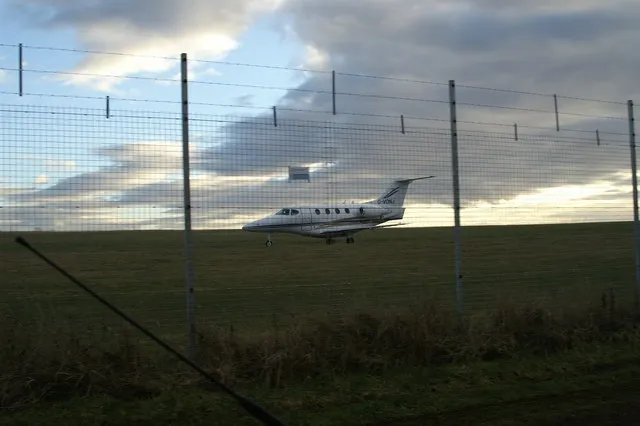
Photo: private jet diverted airport apron ground handling staff dusk Europe, via d.newsweek.com
An itinerary is a sequence of intentions. The departure airport, the cruise, the arrival airport and the car on the apron are all planned in advance, but only the first two are reliably under the operator's control. For UK buyers of private charter, the destination airport is often treated as a fixed point in the contract. In practice it is a preference, subject to weather, air traffic control and the condition of the runway. The diversion is therefore not a remote contingency. It is a normal operational possibility with a commercial consequence that should be agreed before the aircraft leaves the ground.
The event and the exposure
A diversion begins as a safety and regulatory decision. The commander, acting on information from dispatch and air traffic control, decides that the planned arrival cannot be made. The cause may be low visibility, a closed runway, a strike, a slot suspension or a flow restriction that makes the planned arrival impractical within crew duty limits. The aircraft lands at an alternate. Passengers disembark, perhaps after a delay on the ground, and the itinerary continues from a different airport. The operational decision is rarely controversial. The cost consequences are.
For a UK charterer, the exposure is wider than the landing fee at the alternate. It includes handling and parking, fuel uplift, customs and immigration formalities, passenger ground transport, crew meals and overnight accommodation, and the cost of repositioning the aircraft to the intended destination or to its next commercial commitment. There may also be a lost slot or a forfeited handling booking at the original airport. None of these items is exotic. Together they can turn a modest diversion into a material addition to the charter bill.
Reading the cost stack
The first distinction is between costs incurred to complete the contracted journey and costs incurred because the journey changed. Landing and handling at the alternate are usually direct operating costs. So are fuel and crew expenses. Ground transport for passengers is a direct consequence, but it is often supplied by a third party and may be arranged at short notice at a premium. Crew repositioning is another direct cost, and it can be compounded by duty-hour rules: if the crew cannot continue, the aircraft may wait while a replacement crew travels.
The second distinction is between additional cost and consequential loss. A charterer may face a missed business meeting, a cancelled event or a missed connection, but those losses are rarely recoverable under a standard charter agreement. The contract should make clear whether the operator is responsible for the reasonable additional costs of diversion, or whether those costs sit with the charterer. The answer is not uniform across the market. It depends on the cause, the wording of the agreement and the commercial relationship.
Who pays, and why the cause matters
The common starting point is that the charterer bears additional costs arising from a diversion unless the diversion is attributable to the operator. That position reflects the nature of the service: the operator supplies an aircraft and crew, but the charterer selects the itinerary and bears the commercial risk of the journey. If the diversion results from a mechanical failure or an operational failing within the operator's control, the analysis changes. If it results from weather, ATC restrictions or a runway closure, the operator will usually argue that the event is outside its control.
That argument should not be accepted without reading the clause. A force majeure provision may excuse a party from performing an obligation, but it does not automatically transfer every cost to the charterer. The contract should state which costs are recoverable, on what evidence and subject to what cap. It should also distinguish between the cost of landing at the alternate and the cost of restoring the itinerary. A well-drafted clause does not remove the risk. It makes the risk visible.
Clauses that deserve attention
Four provisions merit close reading before signature. The first is the definition of the destination and the alternate. Is the alternate named, or is the commander free to choose? Is there a required diversion airport for the route, and does the operator have handling arrangements there? The second is the cost allocation matrix. It should identify landing, handling, fuel, transport, crew and repositioning separately, rather than referring vaguely to diversion costs. The third is crew duty and rest. A diversion can consume the crew's remaining duty time, and the contract should say who bears the cost of a replacement crew or an overnight stop. The fourth is authority. Who may commit the charterer to ground transport, hotel rooms or a repositioning flight? Without a named contact and a spend limit, costs can be incurred before the buyer has approved them.
Questions before departure
A short list of questions will do more than a long clause. Ask the operator to confirm the designated alternate and the handling arrangements there. Ask for an indicative diversion cost for the route, broken down by item. Ask who authorises passenger transport and crew accommodation, and at what threshold. Ask how the operator will communicate a diversion decision and how quickly a revised itinerary will be issued. Ask whether the aircraft can reposition to the original destination once conditions improve, and who pays for that repositioning. Finally, ask for the name and telephone number of the person who will manage the disruption. In a genuine diversion, the quality of that contact matters as much as the wording of the contract.
A managed outcome
Diversion risk cannot be eliminated by contract. Weather and air traffic control will continue to interrupt itineraries, and the commander's decision to land elsewhere will remain the correct one in many cases. What can be managed is the commercial aftermath. A buyer who has agreed the alternate, the cost matrix, the authority limits and the communication route is in a stronger position than one who discovers the terms after landing. The airport you did not book should not become the line item you did not expect.